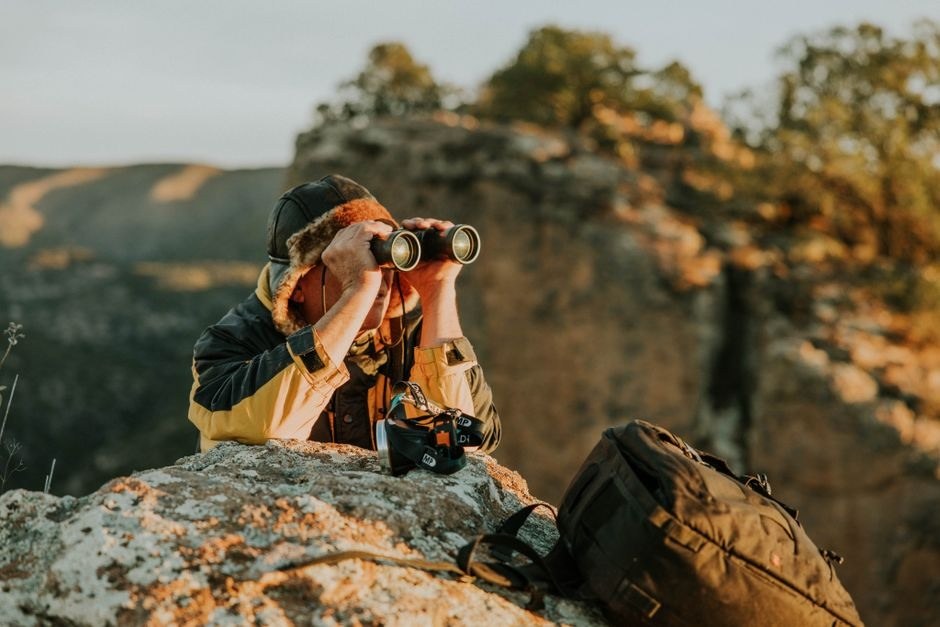
A camera walk works best when taking photographs is only half the reason to go outside. The other half is the slower work of noticing: where the light falls, which corners of a familiar route suddenly feel different, and what changes when you stop moving long enough to look twice.
You do not need a destination that deserves a guidebook. A neighborhood edge, a riverside path, a hill above town or a patch of woodland can be enough. Limiting the route often improves the walk because it removes the pressure to keep moving toward the next landmark.
Give the walk one small constraint
Before leaving, choose a simple boundary. Take one lens. Photograph only within a twenty-minute walk of home. Look for repeated shapes, late-afternoon shadows, doorways, or the way people use benches and paths. A constraint turns the outing from a hunt for impressive subjects into a reason to pay attention to ordinary ones.
If you use a phone, the same idea applies. Ignore the extra modes for an hour and work with the normal camera. Move your feet instead of zooming. Try the scene from the other side of the street. Wait for the light to clear a building rather than immediately taking the first acceptable frame.
Look before lifting the camera
The quickest way to fill a memory card is to photograph every interesting thing the moment you see it. The more useful habit is to wait a few seconds. Ask what actually caught your attention: a line of light, a color against a wall, a gesture, a view between trees, or simply the feeling of space around an object.
Once you can name the interesting part, framing becomes easier. You may realize that the subject is not the entire street but one bright window; not the whole landscape but the narrow path crossing it. Often the best change is subtractive—one step to the side to lose a signpost, a lower angle to simplify the background, or a pause until someone leaves the edge of the frame.
A useful camera walk does not need a large number of photographs. It needs a few moments when you noticed more than you would have without the camera.
Make room for the photograph you did not plan
It is helpful to have an idea, but not a checklist. Weather shifts. A quiet square becomes busy. A patch of cloud turns a flat scene into something soft and even. Leave enough time to follow the thing that is happening rather than forcing the subject you imagined before leaving home.
One practical trick is to stop at the halfway point without taking a picture for five minutes. Sit on a wall or stand somewhere out of the flow of people. After the urge to keep searching settles, smaller details become easier to see: the rhythm of fence posts, the color of dry grass, the way a path bends out of sight.
End with a small edit
When you get home, resist treating every frame as material that must be processed. Choose five photographs that explain the walk to you. They do not need to be the sharpest or most dramatic. A quiet image that remembers the weather or the pace of the hour may belong in the set more than the technically perfect one.
Keeping the edit small also makes the next walk easier. You begin to recognize what you are genuinely drawn to, and that knowledge becomes a better guide than a long list of techniques. The camera remains useful, but attention becomes the main equipment.