Short trips are strangely easy to overpack. Two nights can produce a suitcase designed for several possible versions of the weekend: colder than expected, warmer than expected, smarter than expected, muddier than expected. Most of those versions never happen, but you still carry them through stations, stairs and hotel corridors.
A lighter bag starts with a more ordinary question: what will you actually do? If the answer is walk around a city, eat somewhere casual, read on a train and perhaps spend an hour outdoors, the packing list can be built around those real moments rather than imaginary emergencies.
Start with the fixed parts of the trip
Check the likely weather and identify the one outfit that needs to do the most work. Usually that means comfortable trousers, shoes you can walk in for several hours, and a layer that looks fine indoors after it has been useful outside. Put those pieces at the center of the bag.
Then add changes only where they matter. A fresh shirt can make the second day feel different without requiring a second complete outfit. One warmer layer can move between mornings and evenings. If rain is plausible, a light shell earns its space more easily than a second pair of bulky shoes.
For a typical two-night trip, the useful core is often surprisingly small:
- one main pair of trousers plus what you wear while traveling;
- two or three tops that work with the same layer;
- underwear and socks for each day, with one spare if you prefer;
- one compact warm layer and weather protection;
- sleepwear, basic toiletries and the chargers you actually use.
The list is not a rule. Its value is that every extra item has to explain what problem it solves.
Let things repeat
Repetition is what makes a small bag coherent. The same shoes can work for travel and dinner. The same overshirt can be a light jacket in the afternoon and an extra layer on the train home. Neutrality helps, but the real trick is compatibility: each piece should work with more than one other piece.
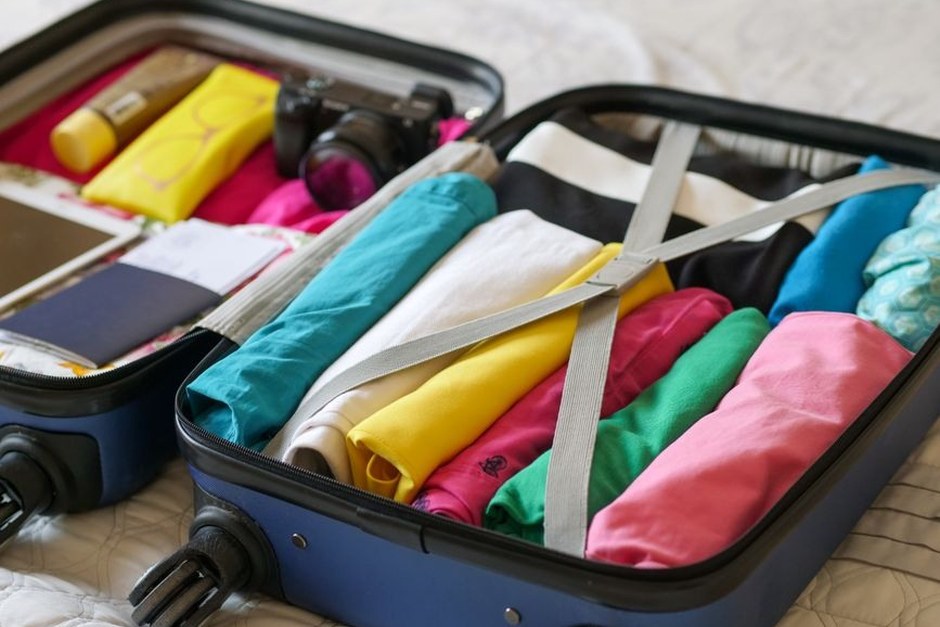
This is also where packing cubes and elaborate systems are optional. They can be useful, but a short trip rarely needs much infrastructure. Rolling softer clothes beside folded shirts is enough for many bags. Small items can live together in one pouch so they do not migrate into corners.
Keep the last quarter empty
A bag that closes only after careful compression is already too full for a relaxed trip. Leave visible space. It makes packing again on the final morning much easier, especially when clothes are no longer folded with first-day precision.
Empty room also absorbs the ordinary things that appear along the way: a book, a small food purchase, a scarf bought because the weather changed, or simply a jacket you do not want to wear in a warm station. Capacity is useful even when you never fill it.
Put comfort where you can reach it
The things that improve the journey itself belong near the top: water, headphones, a paperback, glasses, a charger, a snack. There is little benefit in packing lightly if every train change requires unpacking the suitcase to find one cable.
The result should not feel like a minimalist challenge. It should feel like a bag that stays out of your way. For two nights, that is usually the right measure of success.